When I reported my experience with the solar eclipse in August 2017 in this post, I made this statement at the end:
But I was a different person. I had seen an eclipse. It was too short. I wanted another one. How dare they be so rare!
The next eclipse in the U.S. will be on April 8, 2024, and I will be there. There is no way I will miss that. It will arch up from Texas to Maine, and Chautauqua, one of my favorite places in New York, will be right in the path. And I will be there.
Then, the next coast to coast eclipse will be in 2045. I will be 89 years old. I will be there too.
I have seen a total eclipse, and things are different now.
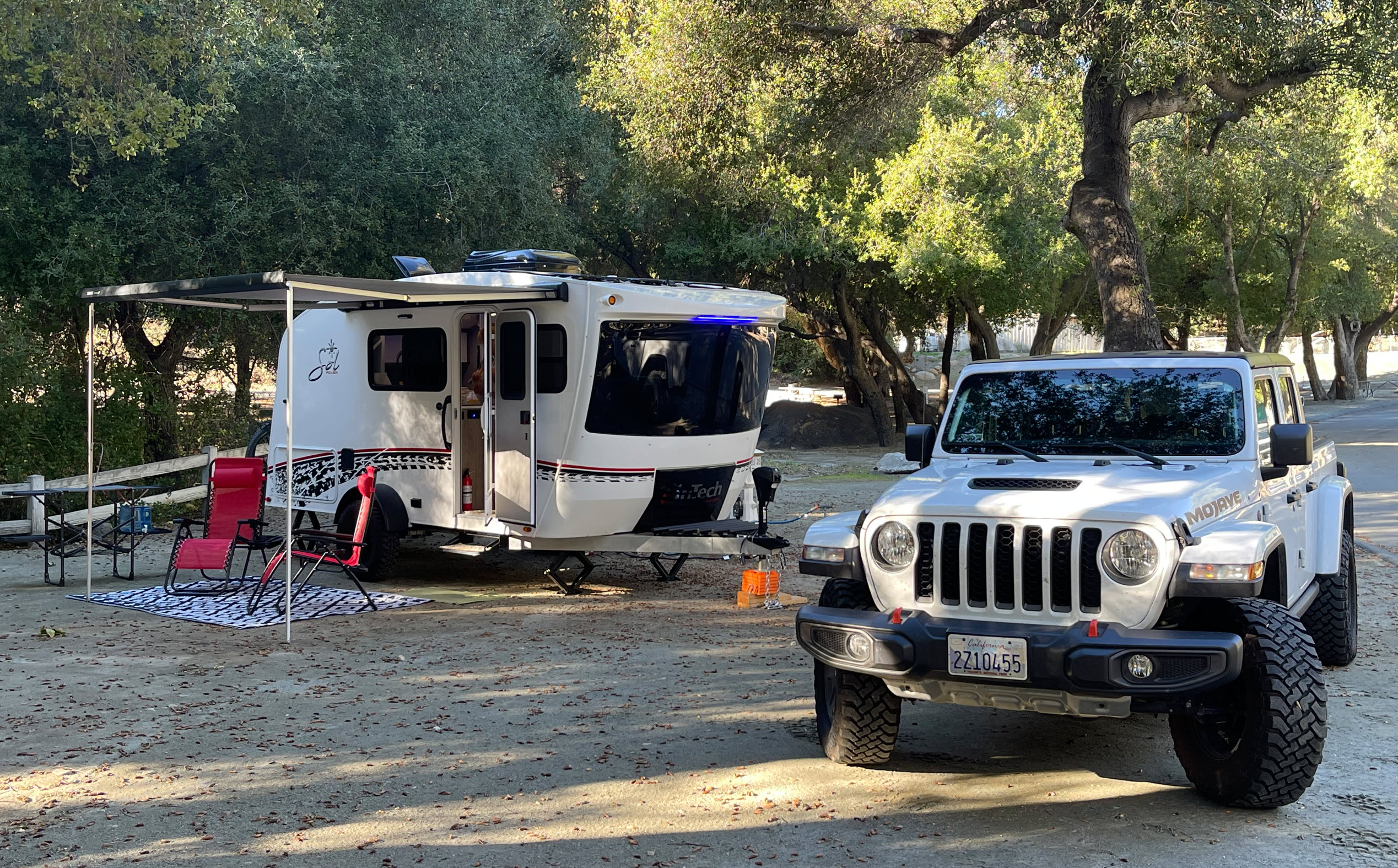
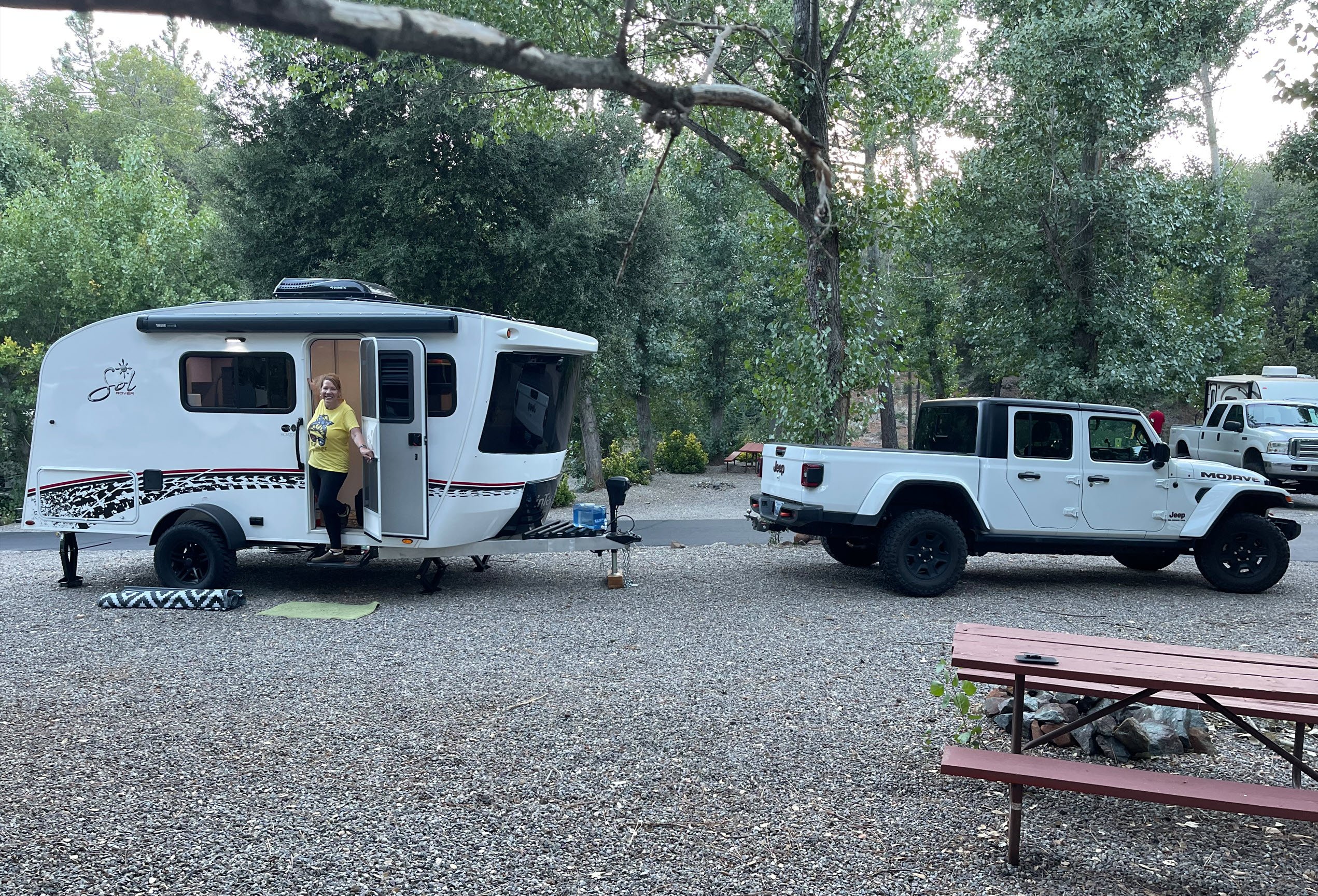
We planned the trip for the 2024 eclipse for several years. We were going to go to central Texas, since I believed we’d have the best chance of clear skies at that time of the year. We were going to make it a road trip, so we bought our trailer last year. One other couple joined us, and our little caravan left San Diego on April 4th. We spent the first night in Picacho Peak, Arizona, the second in Deming, New Mexico, the third in Pecos, Texas and we finally arrived in the very tiny hamlet of Millersview, Texas on April 7th, where we camped in a funky campground literally “in the middle of nowhere.”
The plan was to camp there and then drive down a couple of hours into the path of totality. Our goal was Lampasas, Texas. However, when we researched the weather the night before, it predicted clouds and rain on April 8th in large swaths of central Texas. We settled on the town of Llano, Texas as our best chance.
It was a two-hour drive to Llano, and the skies were mostly cloudy with occasional holes for the sun to peek through. We had several hours to wait. Llano is a very idyllic Texas town, and it was full of visitors. There is a river, and a park, and hundreds of people decided to view the event there. It reminded me very much of our experience seven years ago in Idaho Falls. A small town, many visitors, a park by the river, and an eclipse.
As the partial eclipse started, we saw the sun sometimes, but often it was shrouded by clouds. It was disheartening to imagine that so many people had come so far just to experience the darkness and not see the sun and moon themselves. But we got very lucky. About five minutes before the scheduled totality, the sky opened up and was clear for the next 15 minutes. Llano, with 4 minutes and 20 seconds of totality, had one of the longest duration totalities in the country. We saw the whole event in all its glory, and it took my breath away again.
I am not a photographer, and there are thousands of photos on the Internet by much better photographers, so I spare you my very bad shots. But here are the four of us within the last 30 minutes of waiting for the big event:  But rather than focus just on the four minutes of the eclipse, the whole adventure was a 10 day road trip of 3006 miles in 60 hours and 56 minutes of driving time. During that time, on an empty stretch of freeway in Texas, I got Trisha to drive the rig (with the trailer) for the first time for about an hour. Here she is:
 I think she was quite happy to pass the wheel back to me. It’s a lot more intense driving a truck pulling a heavy trailer than it is just to cruise down the freeway in a truck. On the way back, we stopped at Carlsbad Caverns. Here is the entry into the cave.
  I had no idea how huge this cave system is. The main “big room” cave is 750 feet under the surface. That’s the height of the Empire State Building. A paved path leads down into the darkness, with handrails, in endless switchbacks. We walked at least two-and-a-half miles underground, and we didn’t even get to the parts of the cave that are not accessible to the general public. Also, that was only one way. There is an elevator you can take back up to the surface, as the climb out would be pretty exhausting, with steep switchbacks.
Here is Trisha, posing next to a giant stalagmite, deep underground. 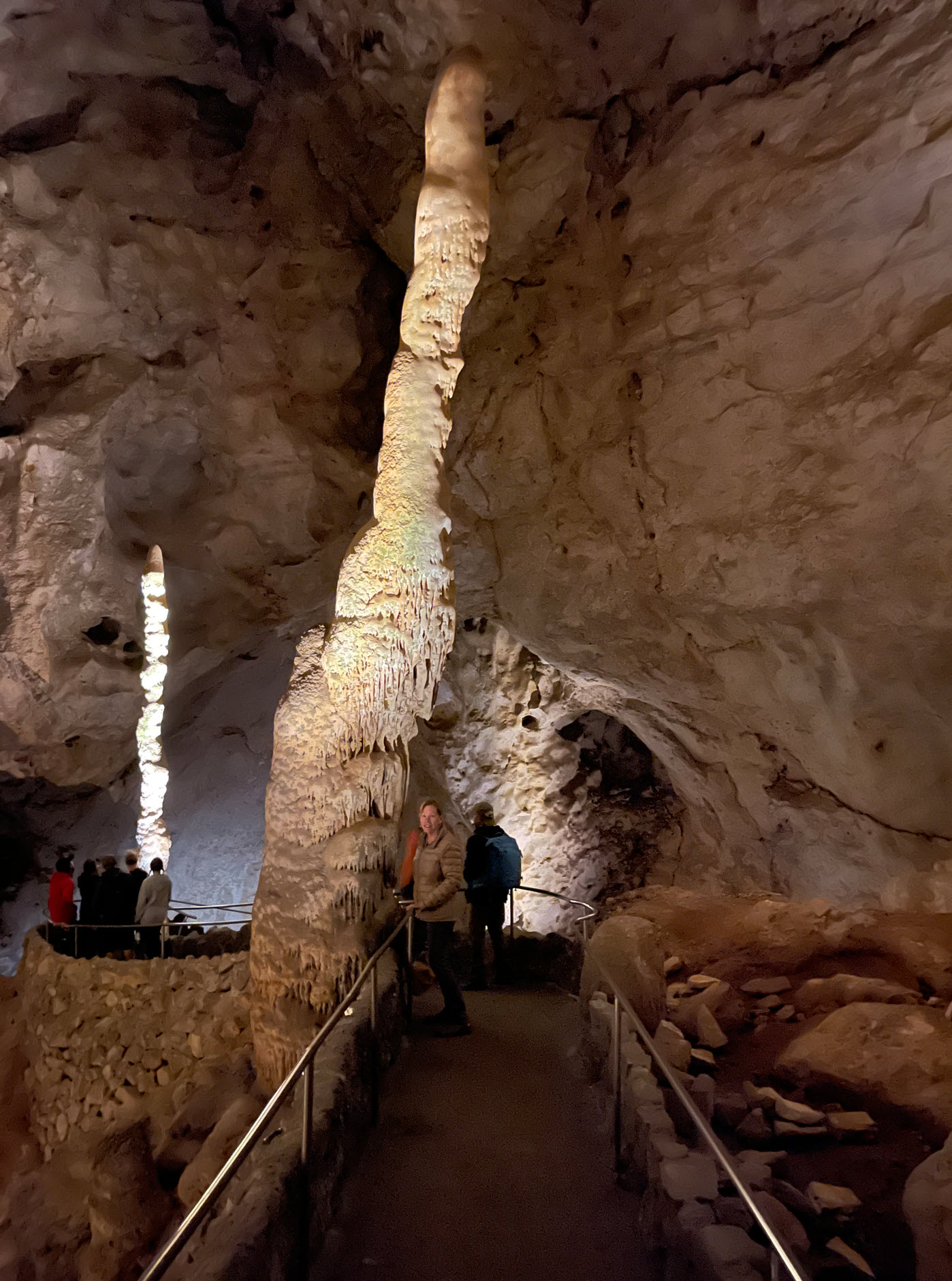 Our visit to the Caverns was only for one afternoon, but I now know that it warrants a much longer visit. I definitely want to go back and spend much more time there. After the Carlsbad Caverns, Trisha had a trip planned for a funeral in Buffalo, so I dropped her off at the airport in El Paso, Texas. From there, I would make my way home alone for the last 1000 or so miles. My first stop was in Las Cruces, where I spent the night. I walked around in the “old town” of Mesilla. Here is the building that was once the Capitol of the Arizona and New Mexico territories before they were states. It was also the court house where the notorious Billy the Kid was tried and convicted.
  After Las Cruces, I stopped by the City of Rocks, a state park about 20 miles north of Deming, on the way to Silver City. This is basically a dry campground with spaces for recreational vehicles. But it required advanced reservations. In the middle of the desert there are all these rock outcroppings, and camp areas are built into and around them. There is a lot of privacy, so you can camp without having neighbors right next to you. Perfect for boondocking.
  Here are a few views of the area.
 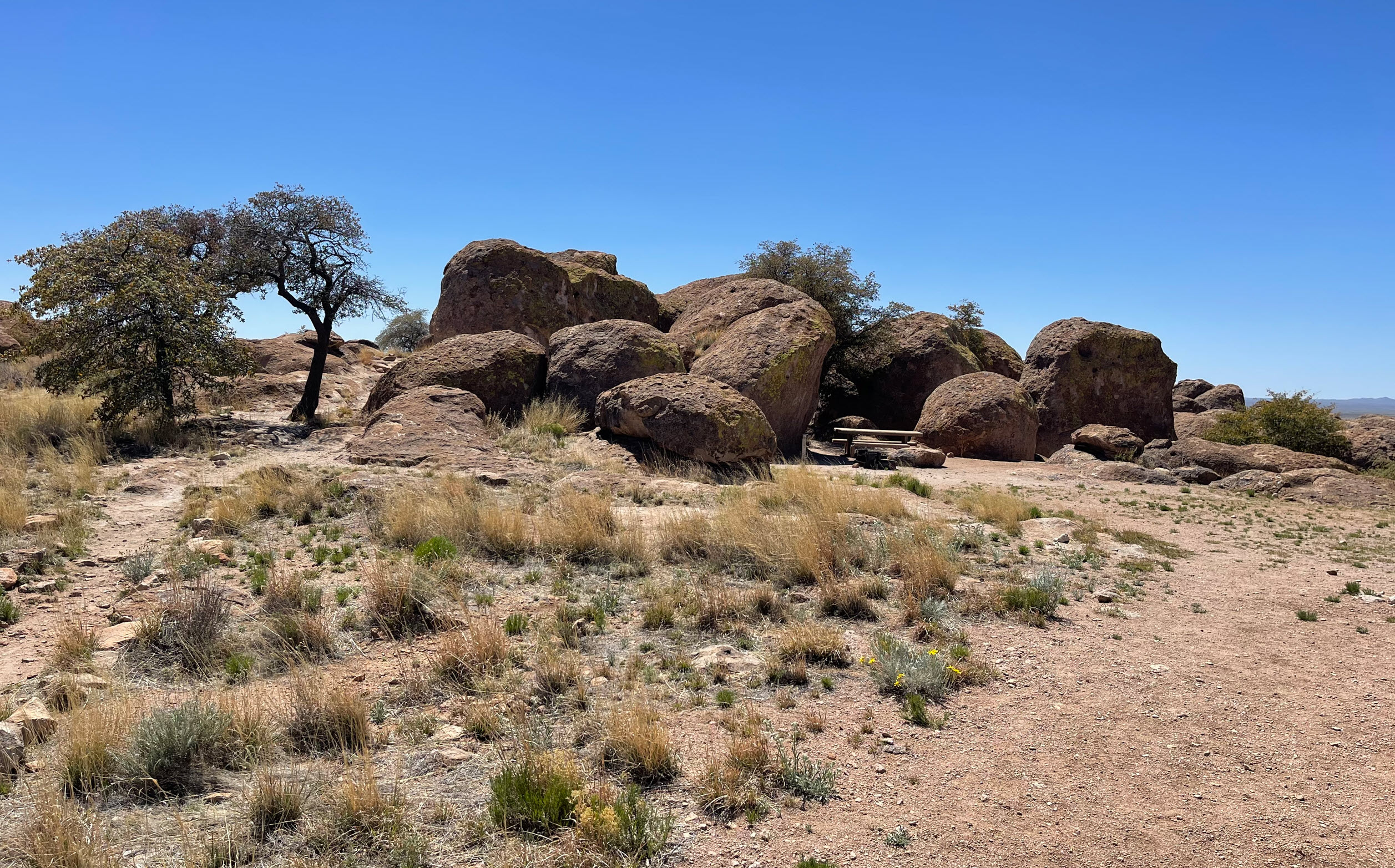 I took a picture with the rig in front of it to give you a sense of scale.
  The next day I stopped at Saguaro National Park south of Tucson and did a 6.5 mile hike in the desert. Here is one shot of some of the iconic saguaros. Needless to say, there are a million of them in this park.
 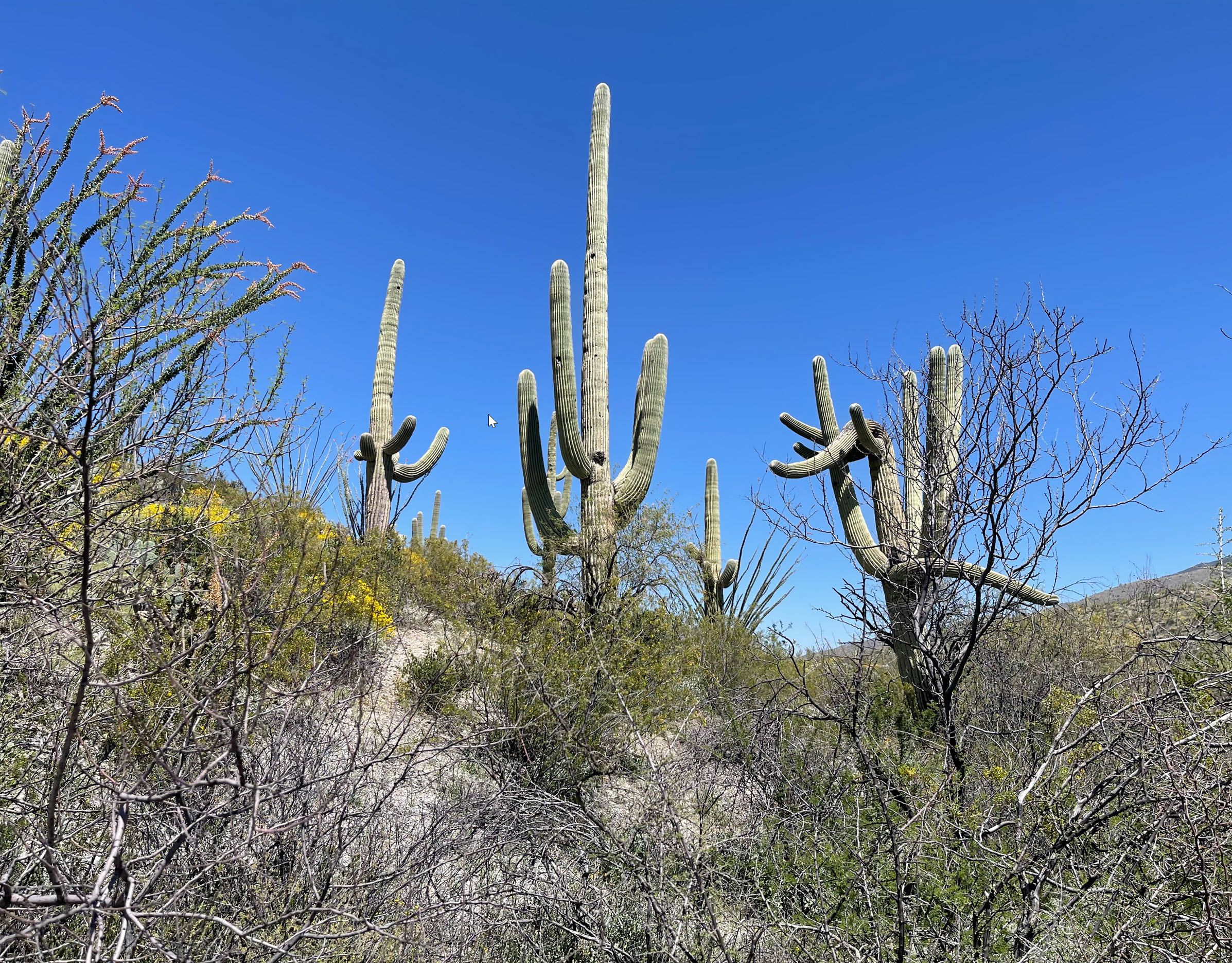 Of course, there are many other types of cactus. Most of them were beyond the blooming phase and many bore fruit.
  These are just a few of the many pictures, many adventures and experiences we gained on this 3000 mile road trip.
Here is a map of the outgoing trip:

And here is a map of the return trip:

This was a very long road trip.
We loved it, and there will be more.
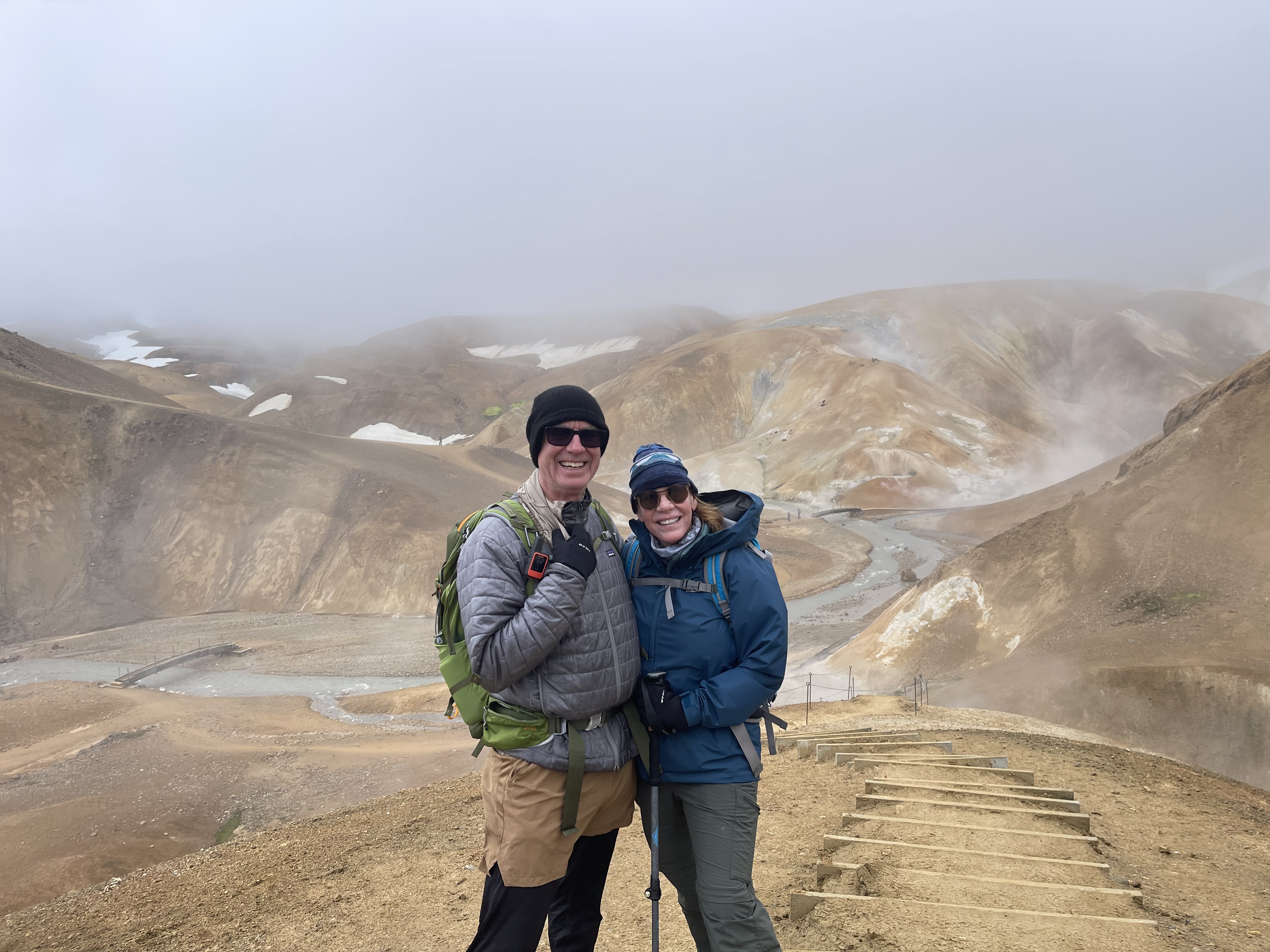 From July 29 to August 4, Trisha and I went on a hut-to-hut hiking tour of Iceland’s Ancient Trails. We booked a 6-day tour with Norse Adventures. Our guide was Jonas Valdimarsson.















 We Are Somewhere